

You have probably started a devotional before. Maybe more than once. You bought the book, set it on your nightstand, opened it faithfully for nine or ten mornings in a row, and then life tilted and the book sat untouched for a week. By the time you picked it up again, the momentum was gone. That is not a character flaw. It is a setup problem. The habit never had a structure underneath it, only intention, and intention alone is not enough to hold a practice through a sick child, a work sprint, or a difficult season.
I have worked in a church gift shop for over two decades. I have sold more devotionals than I can count, and I have also watched dozens of women come back to the shelf looking for a fresh start after the first one did not stick. What I have learned from all those conversations is that the people who keep a daily devotional habit for years are not more disciplined than the ones who quit. They just built the habit differently. This guide walks through the steps they use, starting with the simplest thing and ending with a book recommendation that has helped more of my customers stay consistent than anything else I have found.
If you already know you want a place to start, Jesus Calling is the devotional I recommend most often.
Written by Sarah Young, it is brief enough to read in five minutes and specific enough to feel like it was written for your exact morning. Over 40,000 readers rate it 4.9 stars on Amazon. See why below, or check the current price now.
Amazon Check Today's Price on Amazon →Step 1: Choose Your Window, Not Your Duration
Most habit advice leads with duration. Read for twenty minutes. Set a timer for fifteen. The problem is that a new habit feels like a commitment to time you do not yet have, and when the time feels like a burden, you start bargaining with yourself. So instead of setting a time target, set a window. Morning coffee, before breakfast, during a lunch break, after the kids are in bed. Pick the window that already exists in your day and attach the devotional to it.
Morning is the window most people find works best, and not just for spiritual reasons. Decision fatigue is lowest in the morning. You have not spent the first four hours of your day responding to other people's needs yet. Even if your morning window is only seven minutes while the coffee brews, that is enough. A short reading in a quiet window beats a long reading that you never quite get to.
Write the window down somewhere you will see it. Not as a rule, but as a cue. "Coffee and devotional" on a sticky note on the coffee maker is a prompt, not a demand. The physical cue matters more than most people expect in the first few weeks when the habit is still fragile.
Step 2: Make the Friction as Small as Possible
The devotional needs to be the easiest thing in the room to reach. Not on the shelf. Not in a drawer. On the table where you sit for your window. Right next to the mug or the journal or whatever is already part of that moment. When a habit requires you to retrieve something, locate something, or remember where you put something, the daily friction adds up until one morning you simply do not bother.
This is also why the format of the devotional matters more than most people realize when they are starting out. A long, theologically dense devotional is a wonderful tool for someone whose habit is already established. For someone building the habit from scratch, it can feel like homework. A well-designed short-form devotional, one entry per day, one page, three or four minutes to read, is easier to pick up and easier to finish. Finishing matters in the early weeks because completion builds the small sense of accomplishment that makes you want to repeat the behavior.
Step 3: Pair It With Something You Already Love
Behavioral researchers call this habit stacking. You attach a new behavior to an existing one so the first behavior becomes the trigger for the second. Coffee is the most natural anchor for a morning devotional, but it does not have to be. A walk, a meal, a cup of tea, the drive to work if you are using audio, the end of your workout. The key is that the existing habit is one you already do without effort. When the devotional rides on the back of something automatic, it inherits some of that automaticity over time.
For my own practice, it was coffee and a specific chair. I sat in that chair with my coffee every morning anyway. Adding the devotional to that chair did not cost me extra time, it just changed what I did with the time I was already spending there. Within two weeks, reaching for the book while the coffee cooled felt completely natural.
You can also stack in the other direction. Some people find that after the devotional, writing one sentence in a journal locks in what they read. Not a full journaling practice, just a single sentence. "Today's reading made me think about patience with my mother." That sentence takes thirty seconds and it makes the reading sticky in a way that a passive read-through often is not.
The people who keep a daily devotional habit for years are not more disciplined than the ones who quit. They just built the habit differently.

Step 4: Plan for the Days You Miss
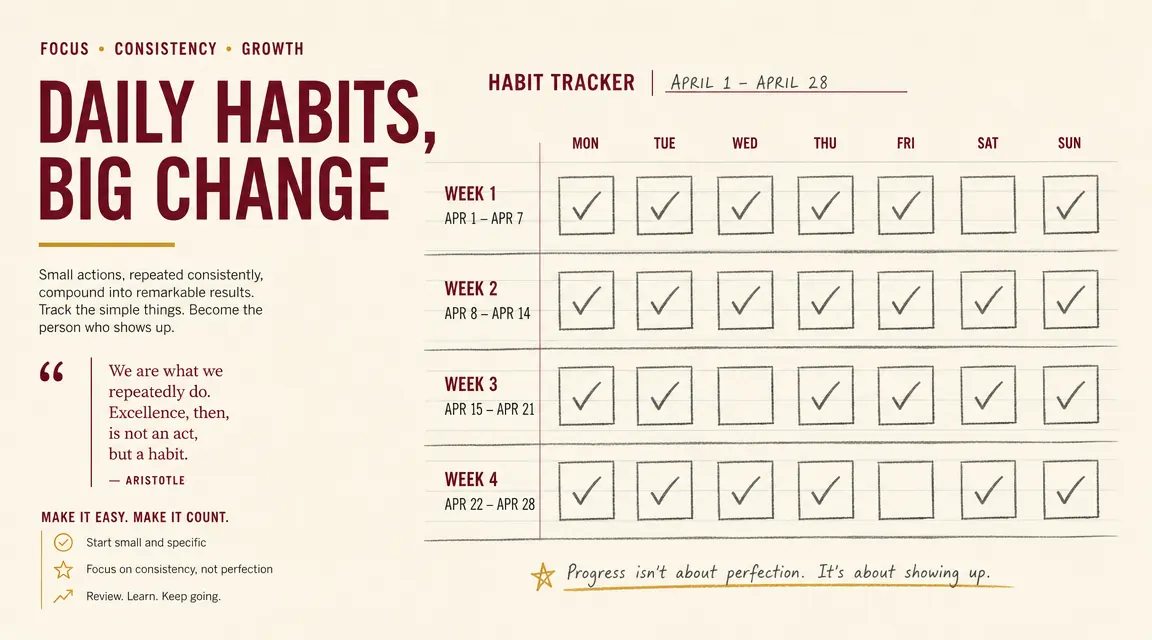
You are going to miss a day. Maybe two in a row. This is not a sign that the habit is broken. It is a normal part of building any practice. The problem is not missing a day. The problem is the story most people tell themselves after missing a day, which is that they have failed and might as well start over next month, or next year, or after things calm down.
Decide in advance what a missed day means. It means you missed one day. Pick up the next morning where you left off. Do not double up, do not try to catch up on skipped entries, just continue. If you miss three days in a row, the re-entry strategy is the same: pick up where you are. Some devotionals, including Thomas Nelson's Jesus Calling, are organized by calendar date, which means you can always find today's entry regardless of how long you stepped away. That structure is more forgiving than a sequential devotional where falling behind starts to feel impossible to recover from.
I have spoken with women who had the same copy of Thomas Nelson's Jesus Calling for seven years, who missed whole seasons of months, and who kept returning to it. The book was still there. The date was still there. They picked up and kept going. A devotional that welcomes you back without requiring you to start over is a better design for real life than one that demands sequential completion.
Step 5: Choose a Devotional That Meets You Where You Are
This is the step most people get wrong, and it is the most important one. The devotional you choose determines whether the habit feels like nourishment or obligation. A devotional that is too long becomes a task. One that is too academic keeps you at arm's length from the experience you were hoping to have. One that assumes a deeper theological background than you currently have leaves you looking up terms instead of sitting quietly with a thought.
What you want, especially in the first several months, is a devotional that is short enough to finish without rushing, warm enough to feel personal, and grounded enough in scripture that you are actually engaging with the Word and not just reading someone's reflections. That is a narrow target to hit, and it is one reason I keep recommending the same book to nearly every customer who comes into the shop asking where to start.
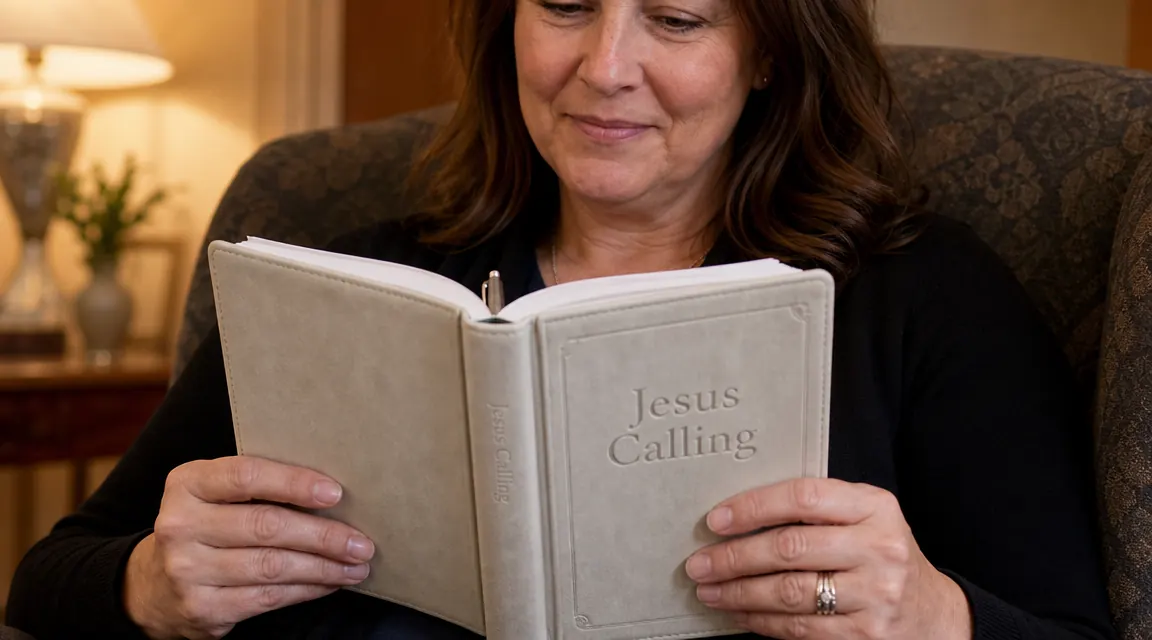
Thomas Nelson's Jesus Calling by Sarah Young has been in print since 2004 and has sold over forty million copies. The entry for each day is a single page, written in first person as if Christ is speaking directly to the reader, drawn from Sarah Young's own prayer journal and anchored to two or three scripture references at the bottom of the page. The format is immediate. You are not reading about the faith, you are sitting inside it for three or four minutes. That quality is exactly what keeps people coming back each morning. It feels less like a reading assignment and more like a conversation you did not know you needed.
The padded hardcover edition is the one I recommend for daily use. The cover holds up to being picked up and set down every morning for years. The pages are thick enough that ink from a pen does not bleed through if you want to underline. And the size, slightly smaller than a standard hardback, fits easily on a nightstand or beside a coffee mug without feeling like a commitment just to carry it to your chair.
At 4.9 stars across more than 40,000 Amazon reviews, it is the highest-rated devotional I have ever seen in two decades of working with these books. That number does not happen by accident. It happens when a book genuinely does what it promises for an enormous range of readers.
Jesus Calling is the devotional I hand to almost every customer who asks where to start.
One page a day, date-organized so you can always find today, written in a voice that feels immediate rather than distant. 4.9 stars from over 40,000 readers on Amazon. See the full details and check the current price below.
Amazon Check Today's Price on Amazon →What Else Helps
A few things I have seen make a consistent difference for women who are building this habit for the first time or returning to it after a long break. First, tell someone. Not to create accountability pressure, but because naming a practice out loud to another person makes it more real and more specific. A friend in your small group, your spouse, a sister. You do not need to report in daily. Just saying "I am starting a devotional habit this month" to someone who cares about your faith anchors the intention.
Second, do not upgrade too quickly. Once a devotional habit is three or four months old and genuinely established, it is natural to want to add to it: a deeper Bible study, a second book, a prayer journal, a full reading plan. All of those things are good. But adding them too early, before the core habit is stable, often collapses the whole practice. Let the simple habit hold for at least a season before you build on top of it.
Third, read honest accounts from other readers before you start. Knowing that other people have wrestled with the first-person format of a book like Jesus Calling, or found certain entries more challenging than others, prepares you for your own experience rather than leaving you surprised by it. The full review at Jesus Calling: One Full Year of Daily Readings covers exactly what a year of consistent use looks like, including the entries that hit differently depending on what season of life you are in. And if you are wondering how Jesus Calling compares to other well-known devotionals before committing, the detailed breakdown at Jesus Calling vs My Utmost for His Highest walks through both books side by side.
The habit is simpler to build than most people expect, as long as you stop relying on willpower to carry it and start relying on structure instead. A small window, a book within reach, something you already love beside it, a plan for the days you miss, and a devotional that actually meets you where you are. That is the whole framework. The rest is just showing up.