

I have sold more copies of Thomas Nelson's Jesus Calling than any other book in the gift shop. More than any Bible edition, more than any wall art piece, more than any piece of jewelry. And for years I handed it over the counter without a second thought, because the women buying it came back months later to say it had changed their mornings. That track record felt like all the endorsement I needed.
Then one Sunday a pastor in our congregation mentioned the book by name from the pulpit. Not as a recommendation. He was raising a concern, carefully and without naming Sarah Young, published by Thomas Nelson, unkindly, about devotionals that put words in the mouth of Christ in first person. A few women in my gift shop had already asked me about it quietly, their faces carrying that particular expression people get when something they love has been complicated for them. I went home that week and read everything I could find on both sides. This review is what I concluded.
The Quick Verdict
A genuinely comforting devotional with a real theological caveat worth understanding before you use it or give it as a gift. For the right reader, used with the right posture, it is a meaningful companion. It is not a substitute for scripture, and Sarah Young never claimed it was. The format is the whole conversation.
Amazon Check Today's Price →You have heard both sides. Here is where to find it at the current price.
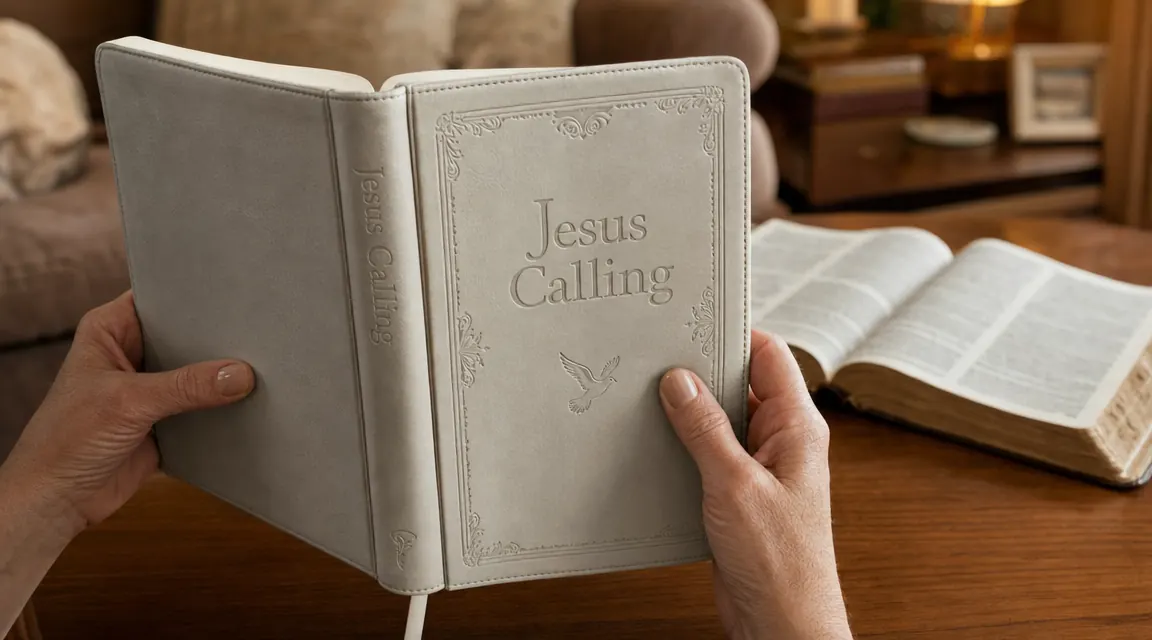
Jesus Calling is available in padded hardcover with full scripture references printed alongside each entry. The scripture references are not decoration. They matter, especially in light of the concerns raised in this review.
Amazon Check Today's Price on Amazon →What the Book Actually Is, Before We Get to the Debate
Thomas Nelson's Jesus Calling is a 365-day devotional written by Sarah Young, a missionary and author who spent years of personal Bible study and prayer journaling. Each day's entry is short, typically 200 to 300 words, and is written as if Christ is speaking directly to the reader. The tone is intimate and still. The entries draw heavily on scripture, with references printed at the bottom of each page. The padded hardcover edition, which is the version most people gift, has a ribbon marker and a quality feel for its modest price.
It has been in continuous print since 2004. As of this writing, it carries more than 40,000 reviews on Amazon with a 4.9 rating, making it one of the most reviewed Christian books on the platform. These are not casual readers. Many reviewers describe returning to the book for multiple years, wearing out their copies, buying fresh ones for grown daughters and widowed mothers-in-law. That pattern of repeat purchase is meaningful. It does not settle the theological debate, but it tells you something real about how the book functions in people's faith lives.
The First-Person Format: What the Criticism Actually Says
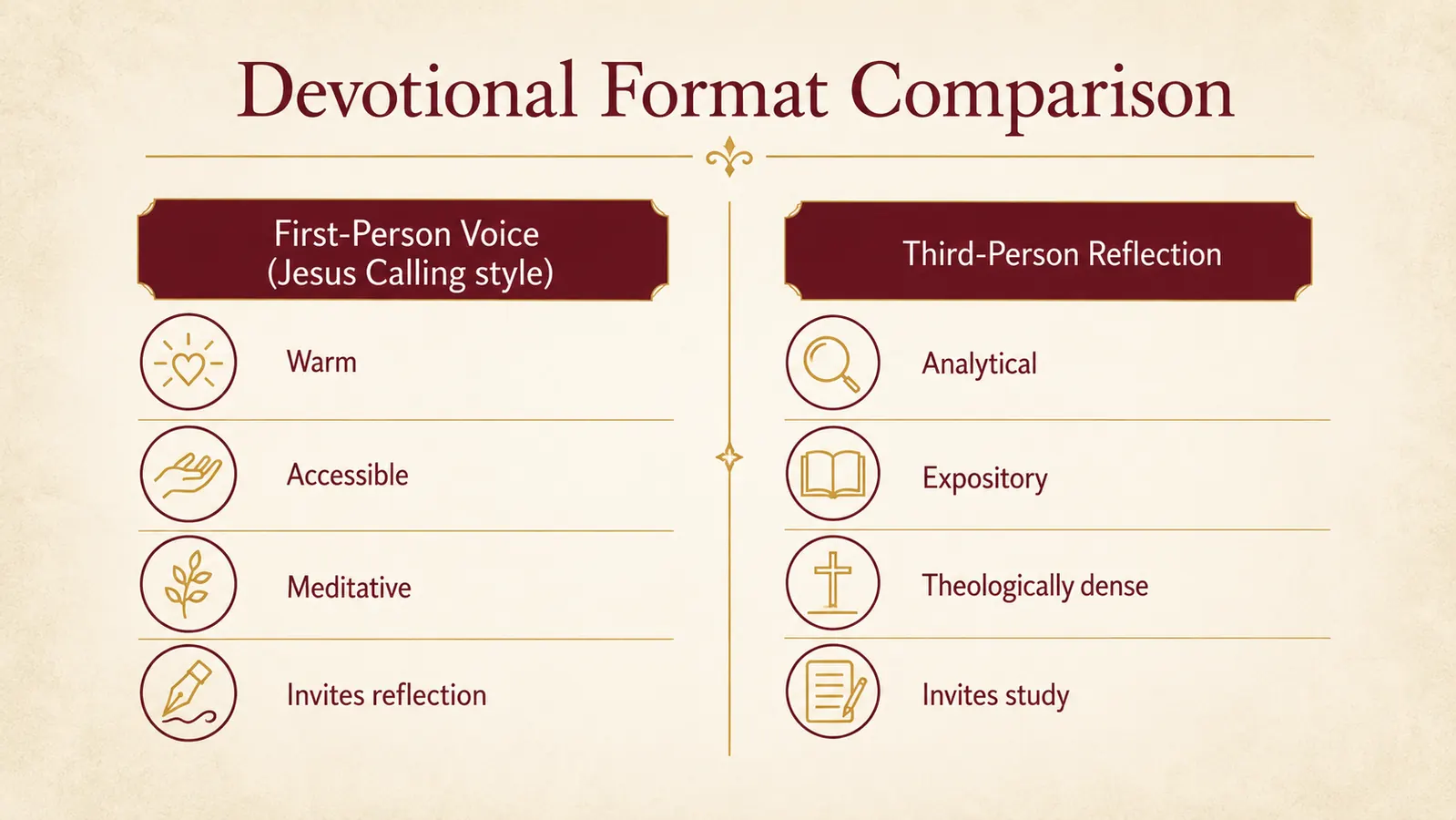
The core concern raised by certain pastors and theologians is this: when a book puts words in the mouth of Jesus Christ and presents them in first person, readers may begin to treat those words with the same authority they give to scripture. Jesus Calling does not claim to be scripture. Sarah Young does not claim her words are divinely inspired in the biblical sense. But the format is designed to feel like Christ addressing you personally, using "I" and "you," and for a reader who is not anchored by that distinction, the line between devotional reflection and the actual words of God can blur over time.
This is not a fringe concern. Respected voices including John MacArthur and Tim Challies have written about it, and their objections come from a genuine place of care for the reader, not from hostility toward Sarah Young. The worry is not that the book is heretical in content. Most of what Young writes aligns well with scripture. The worry is about the format creating a habit of mind where the reader mistakes warmly-written human reflection for direct divine speech.
I take that concern seriously. I think it is worth hearing before you hand this book to someone you love. And I also think the answer to it is simpler than the debate sometimes suggests.
The book has not claimed to be scripture. The reader's posture is what determines whether it functions as a bridge to God or a replacement for His word. That posture is something a gift-giver can shape with three sentences when they hand it over.
How to Use It Responsibly: What I Tell Every Customer
When I hand this book to someone now, I say one thing alongside it. Read the scripture references at the bottom of each page. Do not skip them. The entries in Jesus Calling are Sarah Young's prayerful reflections on those scriptures, and when you read the actual verses alongside the devotional text, you keep the book in its proper lane. You see immediately that the entry is drawing from something real, and you can go to your Bible for the source. That practice takes sixty extra seconds per morning. It changes the entire posture.
I also tell customers that Jesus Calling should sit beside their Bible, not in front of it. Many women who use this book do so as a settling ritual before they open scripture. They read the short entry first because it slows them down and brings them to a quiet place, and then they open their Bible for actual reading. Used that way, the devotional is functioning as an on-ramp, not a destination. That is not only acceptable. It is, for many readers, genuinely helpful. The concern the critics raise is real, but it is a concern about misuse, not inherent harm.
If the person you are gifting this to is a new believer or someone re-engaging with faith after a long absence, mention this when you give it. Not as a disclaimer, but as guidance. You might say: the scripture references at the bottom of each page are where the real treasure is. That framing honors both the book and the reader.
What the Book Does Genuinely Well
Brevity is one of the most underrated features of any devotional. Jesus Calling entries are short enough to read in under four minutes. For a woman caring for aging parents while working and raising children or grandchildren, four minutes is often exactly what is available. The book meets people where they actually are, not where they aspire to be. That is a real ministry.
The tone is consistently warm without being saccharine. Young writes about anxiety, about the impulse to control outcomes, about the weariness that comes from living in a hard world. These are not abstract theological topics. They are the felt experience of the readers who return to this book year after year. The entries on anxiety in particular, and there are many of them, have struck a chord with women managing real fear. When I hear from customers who say the book helped them through a cancer diagnosis or a child's addiction, I do not dismiss that. The book reached them in a moment when reaching was hard.
The physical quality of the padded hardcover edition is also worth noting. It feels like a gift. The cover is soft, the pages are cream-toned, and the ribbon marker is sewn in properly rather than glued. At its current price it genuinely overdelivers on presentation, which matters when you are giving it to someone who deserves to feel honored by the packaging.
What the Book Does Not Do Well
Jesus Calling does not teach theology. It does not explain doctrine, context, or the historical background of the scriptures it references. If the person you are buying for is asking hard questions about their faith, wanting to understand why they believe what they believe, or working through a season of real doubt, this book will comfort them but it will not answer them. For that reader, a study Bible or a book like Knowing God by J.I. Packer or Mere Christianity by C.S. Lewis would serve better. Jesus Calling assumes the reader already holds a basic framework of Christian faith. It is a practice of that faith, not an argument for it.
The format can also feel repetitive across a full year of daily reading. The voice stays consistent, which is a strength for some readers and a limitation for others. If the person you are gifting has been using the book for two or three years already, they may have quietly stopped finding it new. That is not a failure of the book. It is simply the nature of any daily devotional. Worth knowing before you buy a second copy for someone who already owns one.
What I Liked
- Short entries fit a realistic four-minute morning practice
- Warm, non-preachy tone reaches readers in grief, anxiety, and transition
- Scripture references at the bottom anchor each entry in actual biblical text
- Padded hardcover presents beautifully as a gift at an accessible price
- 4.9 rating across more than 40,000 reviews reflects genuine, repeat-use loyalty
- Designed to accompany scripture reading, not replace it
Where It Falls Short
- First-person Christ voice requires a reader who understands the devotional-not-scripture distinction
- Does not teach theology, context, or doctrine; not suited for readers in active doubt
- Repetitive format over multiple years may lose its freshness for long-term users
- Not the right gift for a reader looking for intellectual engagement with faith

Who This Is For
Jesus Calling is for the Christian woman who already has a settled faith and wants a daily quiet-time companion that meets her where she is, not where a seminary professor is. It is for someone who responds to warmth before argument, who finds the posture of prayer more natural than the study of doctrine, and who will genuinely use a short daily reading rather than an ambitious longer one. It is a strong gift for a woman navigating a difficult season, a new mother, a woman caring for an aging parent, someone recently widowed, or anyone whose inner life is running faster than their ability to sit still. The book slows people down. That is its primary gift.
Who Should Skip It
Skip Jesus Calling if the person you are buying for is in a season of real theological questioning, if they are new enough to faith that they are still forming their understanding of what scripture is and what it is not, or if they are already aware of the first-person format controversy and have a personal conviction against it. Respect that conviction. There are excellent alternatives: My Utmost for His Highest by Oswald Chambers is more demanding and more theologically robust. Streams in the Desert by L.B. Cowman carries a similar warmth but uses third-person reflection. Both are worth considering if Jesus Calling is not the right fit for the reader in front of you.
The scripture references in the padded hardcover edition are printed on the same page as each entry. That detail matters.
If you decide this is the right gift, the padded hardcover with scripture references is the edition to get. Not the journal version, not a companion volume. This one. The scripture references are what keep the book in right relationship with the Bible. Check the current price and confirm it is in stock before you buy.
Amazon Check Today's Price on Amazon →